Bole Spring
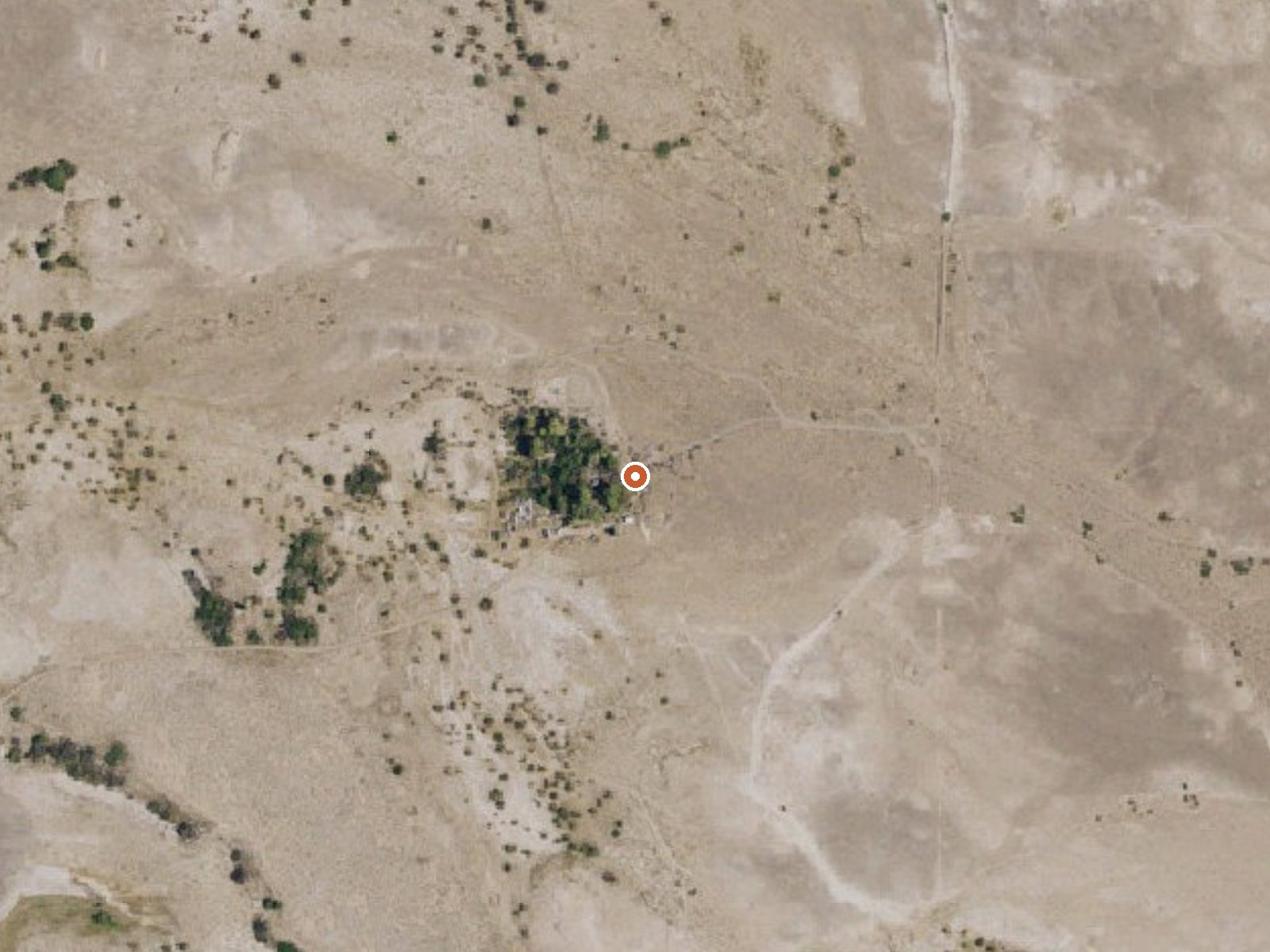
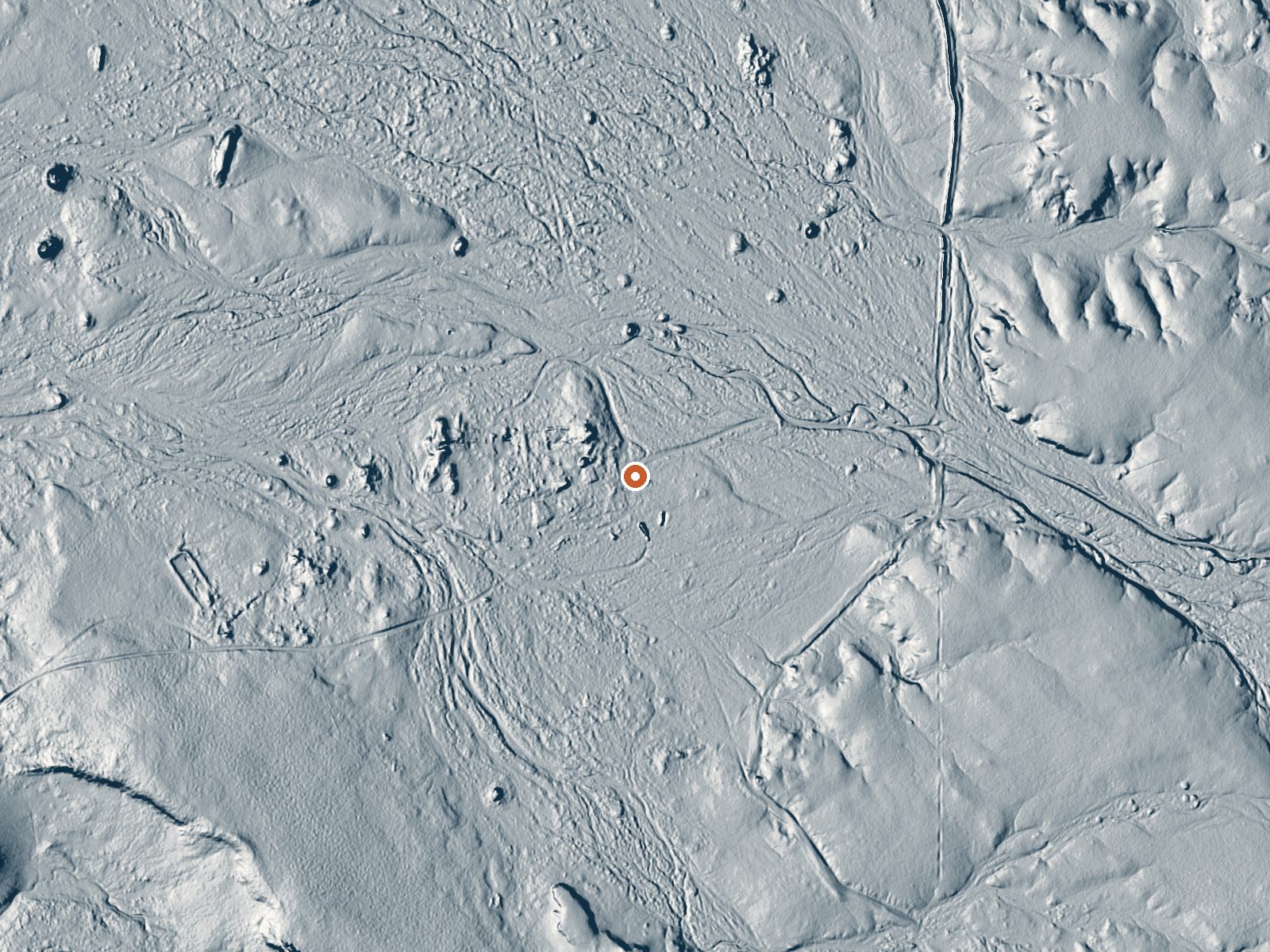
Drag the handle to compare the two views. The orange dot marks the spring, in a frame about three quarters of a mile wide.
Bole Spring is a tepid spring in Nye County, Nevada, eighteen miles out from Pahrump. The water is about the warmth of a swimming pool in spring. A 1994 water sample gives it neutral pH with moderate dissolved solids. Access and ownership are blank, and the USGS holds a site record for it.
The road is fourteen feet away. You could almost reach it from the driver's seat. Low desert country, nearly snow-free, rain of about four inches a year, summers that bake. No land owner or unit is named, so this may be private ground or unallocated public land; the record leaves it open.
Winter is the season on file. At this temperature there is no burn risk; the water is closer to cool than hot. Access is not on record, and with a road that close you will want to know whose land the turnout is on. No fee, no campground. Chemistry dates from 1994.
Aircraft with laser scanners measured this ground to within inches. The scan strips out trees and buildings, leaving the bare shape of the land around Bole Spring.
- Setting
- Open ground
- Flat, open ground all around.
- Highest ground nearby
- 16 ft above the spring
- Within a quarter mile, to the southeast
A slice through the ground from northwest to southeast, about 0.6 miles end to end.
Elevation data: USGS 3D Elevation Program. Aerial imagery: USGS The National Map. Public domain.
That's about 1½ times the US average of 65. It's higher than at 50% of the springs on this site.
Heat flow measures the warmth working its way up through the ground from deep inside the earth. Where it runs high, rain and snowmelt that seep down through cracks in the rock come back up hot.
See every spring on the geothermal heat map →
Heat flow estimate: Stanford Thermal Earth Model (Aljubran & Horne, 2024), CC BY 4.0.
The water at Bole Spring is slightly alkaline (pH 7.4) with 503 mg/L total dissolved solids.
Springs Near Bole Spring
More Springs Around 72°F
Slightly Alkaline Springs (pH ~7.4)
Hike 3 waterfalls near Bole Spring
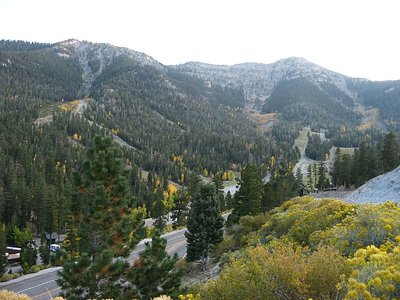
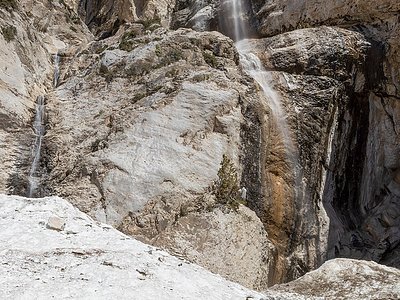
Looking for more outdoor adventures? Explore waterfall hikes near Bole Spring, Nevada.