Johnson Ranch Springs
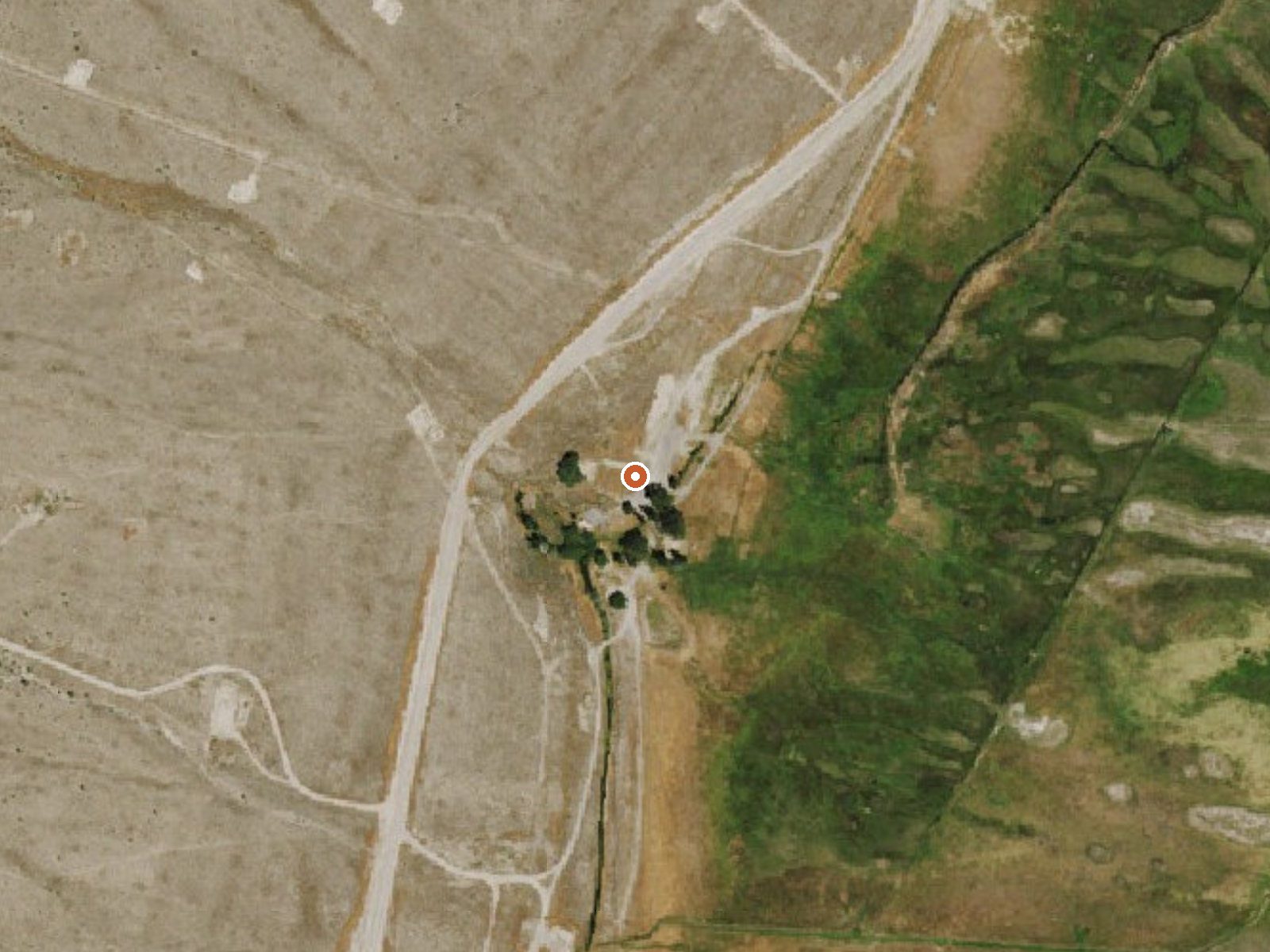
The orange dot marks the spring, in a frame about three quarters of a mile wide.
Johnson Ranch Springs only barely counts as warm. It sits in Elko County, twenty-five miles out of Wells. Seventy-two degrees, cooler than a pool in August. The most recent piece of the record is a USGS sample from October 2017 showing low dissolved solids. The owner goes unnamed and access status is not on record.
The road is unnamed on file; the walk from it is a few hundred feet. The elevation is close to fifty-seven hundred feet, high for a basin spring, with roughly thirty inches of snow across the winter and ten inches of total precipitation. The record skips land unit and designation.
Winter is the season the record recommends, though water this cool will not warm anyone in January. Permission to be there is not on record, so find out before you go. Fees and camping are not on file. The temperature and chemistry come from the 2017 survey visit and could read differently now.
USGS hasn't flown a detailed laser scan here yet, so this view comes from aerial photos and older elevation data.
- Setting
- Gentle slope
- The ground tilts gently up to the west.
- Highest ground nearby
- 107 ft above the spring
- Within a quarter mile, to the west
A slice through the ground from west to east, about 0.6 miles end to end.
Elevation data: USGS 3D Elevation Program. Aerial imagery: USGS The National Map. Public domain.
That's about twice the US average of 65. It's higher than at 69% of the springs on this site.
Heat flow measures the warmth working its way up through the ground from deep inside the earth. Where it runs high, rain and snowmelt that seep down through cracks in the rock come back up hot.
See every spring on the geothermal heat map →
Heat flow estimate: Stanford Thermal Earth Model (Aljubran & Horne, 2024), CC BY 4.0.
The water at Johnson Ranch Springs contains 215 mg/L total dissolved solids.
Johnson Ranch Springs sits at 5,682 feet above sea level, way above the mile-high mark. You may not feel the altitude strongly, but hot water still dehydrates you faster at elevation. UV is about 23% stronger than at sea level, so bring sunscreen and drink more water than you normally would.



As an Amazon Associate, we earn from qualifying purchases.