Cherry Creek Hot Springs
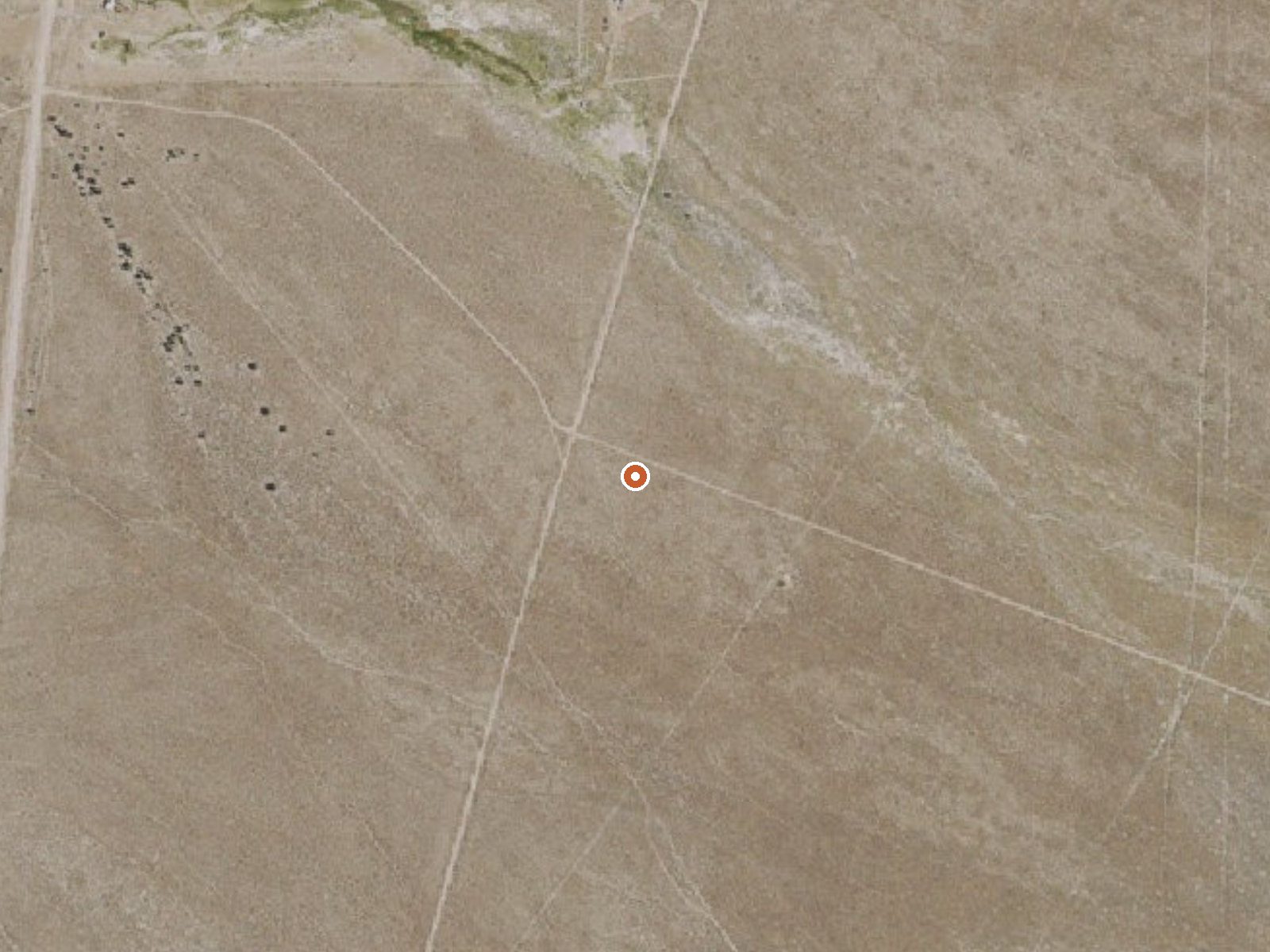
The orange dot marks the spring, in a frame about three quarters of a mile wide.
Thirty-four miles from McGill in White Pine County, Nevada, Cherry Creek Hot Springs comes out of the ground hotter than anyone can touch, scalding by any measure. The record holds a USGS site number and stops there: no owner, no land unit, no access status, no water chemistry. Whoever wants to see it is working from a position on a map and a temperature.
Sixty feet from a road. This is high country for Nevada, and the winters show it, with more than three feet of snow in an average season. Summers are dry. Nothing names the land manager, which leaves private ownership on the table, and no description of the spring itself exists in the file.
The listed window is winter, and that is when the snow falls, a contradiction the record does not resolve. The water will burn at the source; keep hands and feet out of it. Access is unrecorded, so check before you go. There is no fee on file and no camping, and nobody has sampled the water.
USGS hasn't flown a detailed laser scan here yet, so this view comes from aerial photos and older elevation data.
- Setting
- Open ground
- Flat, open ground all around.
- Highest ground nearby
- 89 ft above the spring
- Within a quarter mile, to the northwest
A slice through the ground from northwest to southeast, about 0.6 miles end to end.
Elevation data: USGS 3D Elevation Program. Aerial imagery: USGS The National Map. Public domain.
That's about 1½ times the US average of 65. It's higher than at 20% of the springs on this site.
Heat flow measures the warmth working its way up through the ground from deep inside the earth. Where it runs high, rain and snowmelt that seep down through cracks in the rock come back up hot.
See every spring on the geothermal heat map →
Heat flow estimate: Stanford Thermal Earth Model (Aljubran & Horne, 2024), CC BY 4.0.
Cherry Creek Hot Springs sits at 6,150 feet above sea level, way above the mile-high mark. You may not feel the altitude strongly, but hot water still dehydrates you faster at elevation. UV is about 25% stronger than at sea level, so bring sunscreen and drink more water than you normally would.


As an Amazon Associate, we earn from qualifying purchases.